
There is nothing worse than stepping into a shower expecting warmth and getting hit with cold water halfway through. If your hot water runs out faster than it should, the cause is not always a failed system. Sometimes it is a simple fix. Other times it points to a part wearing out. Here are the most common reasons hot water turns cold too quickly and what you can do about each one.
1. The Tank Is Too Small for Your Household
If your family has grown or you have added extra appliances, your storage tank may not be keeping up. A small electric or gas storage cylinder can empty quickly when multiple taps or appliances run at the same time.
What to do: Try staggering showers, laundry and dishwashing. If the problem keeps coming back, it may be time to upgrade to a larger tank or consider switching to a continuous flow hot water system that heats on demand.
2. The Thermostat Is Set Too Low
If the thermostat is sitting below the recommended temperature, water may feel warm at first but go cold once the limited heated supply runs out.
What to do: Check the thermostat setting on your unit. For most households, the recommended storage temperature is 60°C to prevent bacterial growth and maintain comfort. If you are not sure what the correct setting should be, a licensed plumber can check and adjust it safely.
3. The Heating Element or Burner Is Failing
In electric hot water systems, a worn heating element may not heat the full tank properly. In gas hot water systems, issues with the burner or pilot can stop the unit from reaching the right temperature.
What to do: If your system struggles to reheat between uses or the temperature is inconsistent throughout the day, you likely need a service call. A plumber can replace elements, repair burner faults and restore consistent performance.
4. Sediment Buildup in the Tank
Minerals naturally present in tap water settle at the bottom of a storage tank over time and form a layer of sediment. This layer reduces the amount of heated water available and forces the system to work harder to reach temperature.
What to do: A tank flush removes the sediment and often restores hot water performance noticeably. It is a straightforward maintenance job and one of the most cost-effective ways to extend the life of your system.
5. Your System Cannot Keep Up with New Appliances
Adding a dishwasher, washing machine or additional bathroom puts extra demand on your hot water supply. If your system was sized for a smaller household, the added load can drain it faster than it can recover.
What to do: Review your household usage. If your needs have changed, upgrading to a larger system or exploring a heat pump hot water system may be the most efficient long-term option.
6. A Faulty Mixing Valve
Modern hot water systems use a mixing valve (also called a tempering valve) to blend hot and cold water to a safe delivery temperature before it reaches your taps. If the valve fails or sticks open, it can introduce too much cold water into the mix, causing temperature to drop off quickly.
What to do: A plumber can test and replace the mixing valve if needed. This is often a quick fix that restores steady temperature at the tap. If you notice your shower temperature swinging between hot and cold, a faulty mixing valve is one of the first things to check.
7. The System Is Old and Losing Efficiency
Older hot water systems naturally decline in performance. Parts wear, reheating slows down and the water does not stay hot for as long between uses. Most storage systems last 8 to 12 years, while continuous flow units can last longer with regular servicing.
What to do: If your system is approaching or past the end of its expected lifespan, upgrading is often the most cost-effective option. Newer units are more energy efficient and better equipped to handle modern household demand.
Why Does My Instantaneous Hot Water Keep Going Cold?
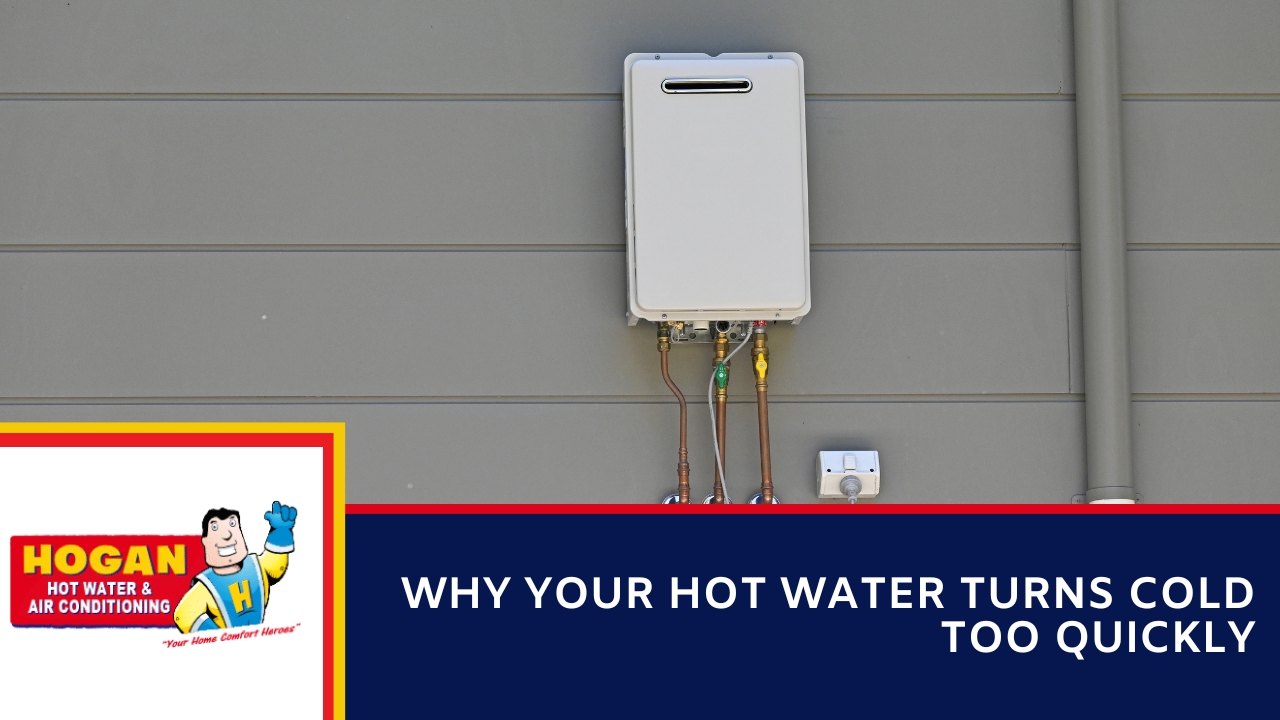
Instantaneous or continuous flow systems work differently to storage tanks. They heat water on demand rather than storing it. When an instantaneous system goes cold, the cause is usually one of the following:
- The unit is undersized for the flow rate being demanded
- Scale or mineral buildup is restricting the heat exchanger
- The temperature is set too low for the flow rate
- The water flow drops below the unit’s minimum activation threshold
- There is a gas supply issue or a sensor fault triggering a safety shutoff
A cold water sandwich effect can also occur with continuous flow systems. This happens when residual hot water left in the pipes from a previous use reaches you first, followed by cold unheated water, then hot again once the unit fires up properly. It is more noticeable at lower flow rates or when taps are used in quick succession.
Regular servicing keeps continuous flow units running reliably and helps catch sensor and scaling issues early.
When to Call Hogan Hot Water and Air
If your hot water keeps turning cold too fast or you are not sure what is causing the problem, contact Hogan Hot Water and Air. We service, repair and replace hot water systems across Newcastle, Lake Macquarie, Maitland and the Central Coast. We can inspect your system, fix the fault and recommend the best long-term solution for your home. Call 0488 029 618 or get in touch here to book a service.
Frequently Asked Questions
Why does my hot water suddenly turn cold?
Sudden cold water usually means the system has run out of heated water, the thermostat is set too low, or a heating element or burner is failing. In some cases, a faulty mixing valve may be blending in too much cold water. If the issue appears without warning, it is worth having the system checked to avoid further damage.
How do I know if my hot water heater is full of sediment?
Common signs include popping or rumbling sounds from the tank, longer heat-up times, reduced hot water capacity or water that turns cold faster than usual. Sediment settles at the bottom of the tank and reduces efficiency over time. A tank flush by a licensed plumber can remove the buildup and restore performance.
How do you fix fluctuating hot water temperature?
Temperature swings can come from a faulty mixing valve, low hot water storage, problems with the thermostat, or issues with the heating element or burner. Pressure changes when other taps or appliances run can also cause fluctuations, particularly in older systems. A plumber can test the components and fix the root cause so your shower holds a steady temperature.
Why does my instantaneous hot water go cold?
Instantaneous systems can go cold if they are undersized, blocked by scale, set to a low temperature or if the water flow rate drops below the unit’s minimum activation level. Gas supply issues or sensor faults can also trigger a shutoff. The cold water sandwich effect is also common with continuous flow units when taps are used in quick succession. Regular servicing helps keep these systems running reliably.
How long should hot water last in the shower?
A standard 125-litre electric storage system typically supports two to three consecutive showers. A 160 to 250-litre system suits larger households. If hot water runs out faster than expected, it often points to sediment buildup, a failing element, thermostat issues or a tank that is simply undersized for current household demand.