

A solar hot water system is built to sit on the roof and quietly do its job for years. So, when something goes wrong, the signs can be easy to miss until you’re standing under a cold shower wondering what happened. Some faults are a slow decline you can book in at your convenience. Others mean water where it shouldn’t be, or a system running up your power bill without you knowing. This post covers the warning signs that need attention now, and the ones worth keeping an eye on.
Quick summary
If your solar hot water has gone cold, is leaking, tripping the power, or you can see water staining the roof or tank, treat it as urgent and get it looked at before it causes more damage. Common culprits are a failed circulating pump, a dead booster element, faulty sensors, or a leaking tank. Hogan Hot Water and Air Conditioning repairs and services all solar systems across Newcastle, Lake Macquarie, Maitland and the Central Coast, and stocks common solar parts to get most jobs sorted quickly. For fast service, call 0488 029 618.
No hot water at all
This is the most obvious one, and the cause depends on the weather and time of day.
If you’ve had a run of cloudy days or it’s the middle of winter and the water is cold, the booster might not be kicking in. Solar systems use an electric or gas booster to top up the heat when the sun isn’t doing enough. If that booster has failed, you lose your backup and the water never gets up to temperature.
If the water is cold even after a clear, sunny day, the system isn’t collecting or transferring heat properly. On a split system, where the tank sits on the ground and the panels are on the roof, that often points to the circulating pump. The pump moves fluid between the panels and the tank, and if it’s stopped, the heat collected on the roof never makes it down to your water.
Either way, no hot water is worth a same-day call, especially with a houseful of people.
Water leaking from the tank or roof
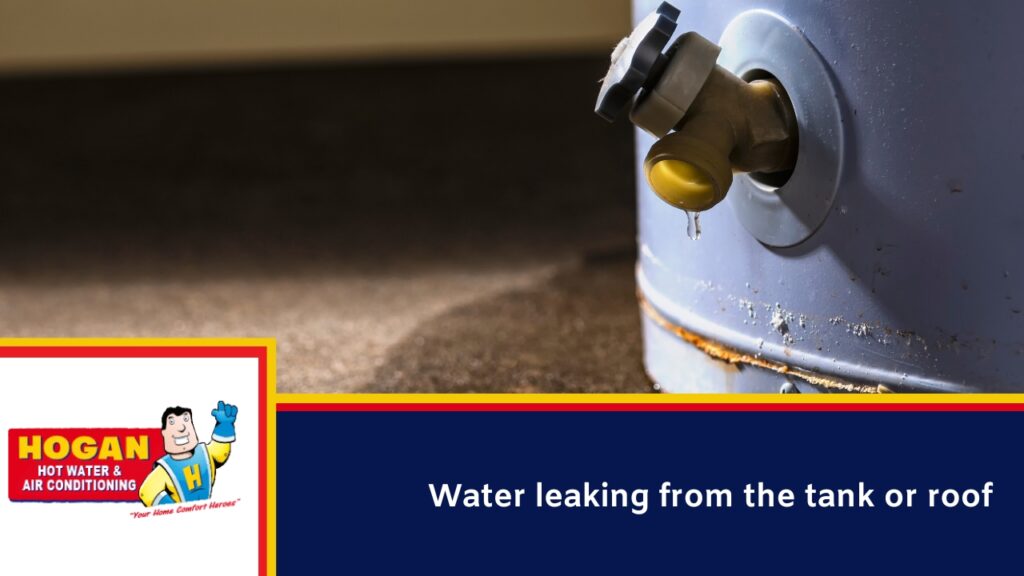
A leak is always urgent. Solar tanks hold a lot of water, and a slow leak can rot roof timbers, stain ceilings, and damage whatever sits below before you notice the puddle.
Look for water pooling around the base of a ground-mounted tank, staining or rust streaks down the side of the cylinder, or drips and water marks on the roof near the panels. A small amount of water discharging from the relief valve now and then is normal, but a steady leak or a valve that’s constantly dripping is not.
If you spot any of this, turn off the water supply to the system if you can reach it safely, and call for a repair. A leaking tank that’s reached the end of its life usually needs replacing, but a faulty valve or fitting can often be fixed.
The system is tripping the power
If your solar hot water keeps tripping the safety switch or blowing a fuse, stop resetting it and get it checked.
This usually means moisture has reached an electrical component, or the booster element has failed and is shorting out. Repeatedly flicking the switch back on doesn’t fix the fault, it just keeps re-energising a system that has a reason to be cutting out. Leave it off and book a repair.
Lukewarm water or running out too fast
Not every fault is dramatic. A system that used to deliver plenty of hot water but now runs lukewarm, or runs out halfway through the second shower, is telling you something is wearing out.
Common causes include a booster element that’s partially failed, a build-up of sediment in the tank, or a sensor that’s misreading the temperature and switching the booster off too early. Solar systems rely on tank and roof sensors to decide when to run the pump and the booster. When a sensor drifts or fails, the system makes the wrong calls and your hot water suffers.
It’s not an emergency, but it tends to get worse, and it’s often quietly adding to your power bill while it does.
Strange noises or the pump running constantly
On a split system you can sometimes hear the circulating pump. A healthy pump runs when there’s heat to move and rests when there isn’t. If you can hear it running non-stop, or it’s making knocking, rattling or whining noises, the pump or its control panel may be on the way out.
A differential pump controller is the brain that decides when the pump should run, based on the difference between the roof and tank temperatures. If that controller or a sensor is faulty, the pump can run when it shouldn’t, wasting power and wearing itself out faster.
Why quick action matters
Solar hot water faults rarely fix themselves, and most get more expensive the longer they’re left. A leaking tank can turn a repair into a ceiling repair. A failed booster left through winter means weeks of cold showers. A pump running constantly burns power and shortens its own life.
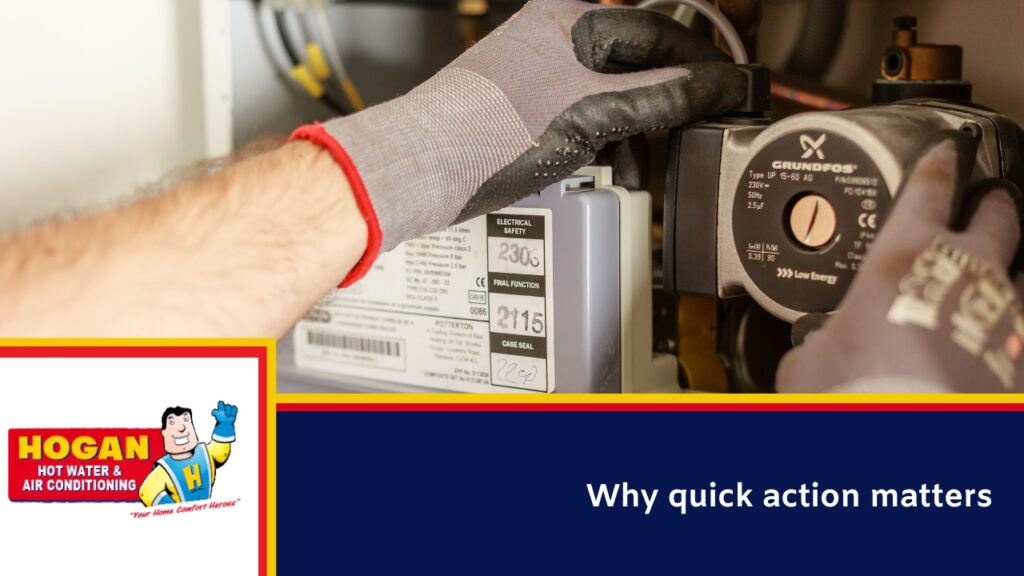
The good news is that a lot of solar faults are repairable rather than replace-the-whole-thing jobs. A failed pump, a dead sensor, a faulty non-return valve or a tired control panel can often be swapped out. Hogan keeps a large range of solar spare parts on hand, including Grundfos circulating pumps, tank and roof sensors, solar non-return valves and differential control panels, so a lot of repairs can be done in a single visit rather than waiting on parts.
If you’d rather replace an ageing system than keep repairing it, the team can talk you through the options, including switching between solar, gas, electric and heat pump, and what government rebates you might be entitled to.
Quick reference: urgent vs keep an eye on
Treat as urgent and call straight away:
- No hot water at all, especially with people in the house
- Any leak from the tank, fittings or roof
- The system tripping the power or blowing fuses
- A burning smell or visible scorching near electrical parts
Book in soon, but not an emergency:
- Water that’s lukewarm or runs out faster than it used to
- The booster seeming to run more than it should
- Minor pump noise or a pump that runs longer than usual
Frequently asked questions
My solar hot water is cold after a sunny day. What’s wrong?
If the water is cold despite good sun, the system isn’t moving or storing the heat it collected. On a split system that usually points to the circulating pump or a sensor fault. It’s worth booking a repair rather than waiting, as the problem won’t resolve on its own.
Is a leaking solar tank repairable, or do I need a new one?
It depends where the leak is. A leaking valve, fitting or connection can often be repaired. A tank leaking from the cylinder itself has usually reached the end of its life and needs replacing. A technician can tell you which it is once they inspect it.
Why does my solar system keep tripping the safety switch?
Most often its moisture reaching an electrical part or a failed booster element shorting out. Don’t keep resetting it. Leave the system off and get it checked, as repeated resets won’t fix the underlying fault.
Can you repair my system, or do I have to replace it?
Many solar faults are repairable, including pumps, sensors, valves and control panels. Hogan stocks common solar parts so a lot of jobs are done in one visit. If a system is old or the tank has failed, replacement may be the better value option, and the team will give you both.
Do you service all solar hot water brands?
Yes. Hogan repairs and services all varieties of solar hot water systems, including tank-and-panel roof setups, ground tanks with roof-mounted panels, and evacuated tube systems, across the major brands.
Which areas do you cover?
Newcastle, Lake Macquarie, Maitland and the Central Coast.
Get in touch
If your solar hot water has stopped, started leaking, or just isn’t performing the way it used to, the sooner it’s looked at the better. For fast service or to discuss your needs, call 0488 029 618. For non-urgent enquiries, or if it’s out of hours, fill in the form on the contact page.