

Rusty or discoloured hot water is a common issue in Australian homes and often signals faults in the hot water system or plumbing. Water may turn brown, red, or cloudy when corrosion, sediment, or minerals enter the supply. While not always harmful, it reduces water quality and often indicates the need for servicing or replacement.
Discolouration can occur when the tank lining breaks down, sediment settles inside, or galvanised pipes corrode. Minerals such as iron or manganese in the water supply may also cause changes. Identifying the source helps determine whether the tank, anode rod, or pipework is responsible.
If left untreated, the problem can lead to leaks, system failure, or damage to household plumbing. Simple checks, such as flushing the tank or assessing the anode rod, may resolve minor issues. Where discolouration persists, professional inspection is required to confirm the cause and restore clear water.
Why Does Hot Water Turn Rusty or Brown?
Rusty or brown hot water usually indicates corrosion or build-up within the system. Identifying the source is key to restoring water quality.
The most common causes include
- Corrosion inside the hot water tank when protective linings fail and steel surfaces rust
- Sediment settling at the bottom of the tank and mixing with water during heating or heavy use
- A deteriorated anode rod that no longer shields the tank from corrosion
- Galvanised pipes breaking down and releasing rust flakes into the supply
If discolouration appears only in hot water, the tank is likely responsible. When both hot and cold taps show signs of rust, the problem may lie in household pipework.

Common Signs and What They Mean
Discoloured hot water can look different depending on the cause. Paying attention to colour and consistency provides useful clues.
The main signs include
- Red or orange water often caused by rust in the tank or old iron pipes
- Brown or dirty water linked to sediment stirred inside the tank
- Yellow tinge that may indicate minerals such as manganese or iron in the supply
- Cloudy or milky water usually caused by air bubbles or harmless minerals that clear after a short time
If only hot water appears discoloured while cold taps remain clear, the issue is likely within the hot water system. If both hot and cold water are affected, pipework or the mains supply may be responsible.
Risks of Ignoring Rusty or Discoloured Hot Water
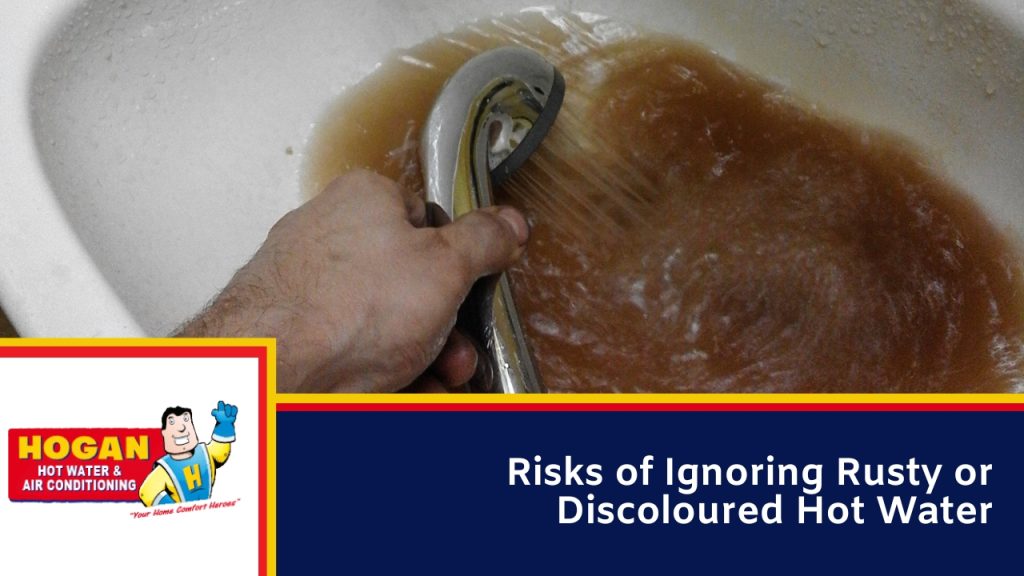
Discoloured water may not be harmful in small amounts, but it creates long-term problems if ignored. Corrosion weakens the tank over time and can lead to leaks or sudden failure. Sediment and rust also lower efficiency, forcing the system to use more energy to heat water.
Stains on sinks, bathtubs, laundry, and appliances are another concern. Rust particles can damage fittings and shorten the lifespan of dishwashers, washing machines, and other household systems.
Water that looks or tastes unpleasant is unsuitable for cooking, cleaning, and bathing. Allowing the problem to continue increases the chance of costly repairs and replacement. Addressing it early helps keep the system reliable and water safe for daily use.
What to Do if You Notice Rusty Hot Water
When rusty water appears, simple checks can help determine the source before arranging professional support.
Steps to consider include
- Flushing the tank to clear sediment build-up and restore water clarity
- Checking the anode rod, since a worn rod leaves the tank vulnerable to corrosion
- Running cold taps to see if pipework is also affected
- Assessing the age of the system, as tanks older than 8–12 years are more prone to failure
If these steps do not improve water quality, a licensed technician should inspect the system. Professional assessment confirms whether repair or replacement is the best option and ensures the household supply remains safe.
Preventing Rust and Discolouration
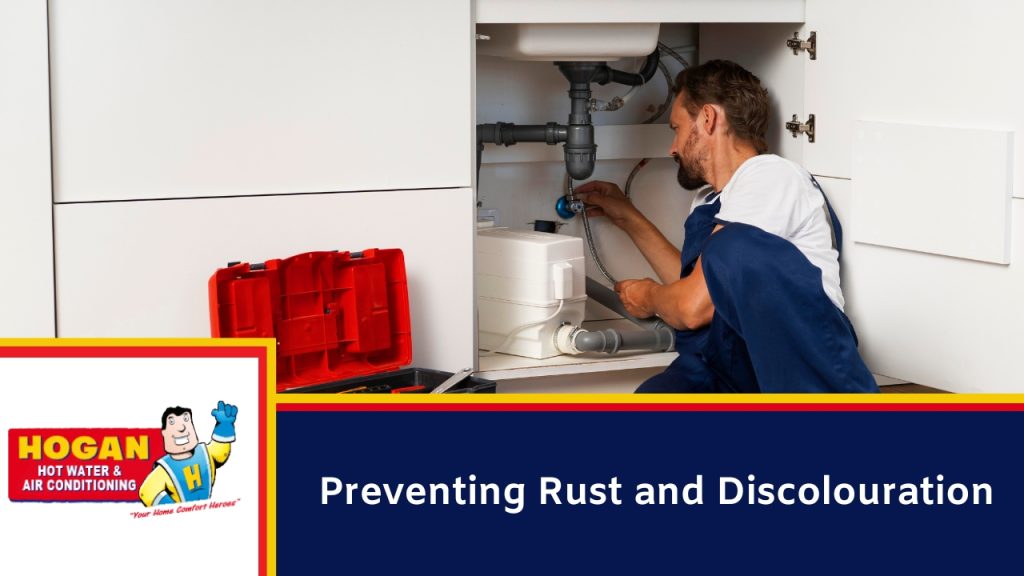
Reducing the risk of rusty water depends on proactive maintenance. Replacing the anode rod before it wears out keeps the tank lining protected and slows corrosion.
Flushing the tank helps remove minerals and sediment that settle at the bottom. Without this step, particles mix into the water during heating and cause discolouration.
Older galvanised pipes often contribute to the problem. Upgrading to copper or plastic improves water quality and prevents rust particles from entering the supply. In some homes, filtration systems are also used to reduce mineral content.
These steps extend the lifespan of the hot water system and help keep water clear for everyday use.
When to Call the Professionals
If rusty or brown water continues after basic checks, professional support is required. A plumber can test the supply, inspect the tank, and confirm whether corrosion, sediment, or pipework is responsible.
In many cases, flushing alone is not enough, and replacement of the tank or sections of pipework is needed. Professional servicing also detects issues early, before leaks or sudden failure occur.
Expert inspection ensures the right solution is chosen, reducing future costs and maintaining reliable water quality.
Get Help with Rusty or Discoloured Hot Water
Rusty or discoloured water often results from tank corrosion, sediment, or ageing pipes. Fixing the issue promptly protects plumbing and ensures safe supply for household use.
Hogan Hot Water and Air provides inspections, servicing, and replacements across the region. Our technicians manage a wide range of hot water services, from anode rod checks to full tank installations.
If you have noticed rusty water at home, contact us to arrange an inspection.
FAQs
Can rusty water damage appliances?
Yes. Rust particles and sediment can shorten the lifespan of washing machines, dishwashers, and hot water-connected appliances by causing internal staining and blockages.
Does discoloured water affect water heaters with storage tanks only?
Mostly, yes. Storage tanks are more prone to corrosion and sediment build-up, while continuous flow systems are less likely to produce rusty water.
Is rusty water more common in certain regions?
Areas with hard water or older infrastructure tend to experience more cases of discoloured water because minerals and ageing pipes increase the risk.
Can water quality testing confirm the cause of discolouration?
Yes. Professional testing can detect mineral levels, corrosion, or pipe deterioration, helping to identify whether the issue lies in the tank, pipes, or supply.
Should hot water systems be drained even if water looks clear?
Yes. Draining helps prevent sediment build-up, which can develop even before water shows visible signs of discolouration.